While the automotive world has been marveling at China’s electric vehicle makers—and how quickly they have surpassed many European, Japanese, and American competitors—I’ve been equally impressed by a wave of consumer electronics from little-known Chinese companies. These products aren’t just inexpensive; they’re thoughtfully designed, highly innovative, and often rethink familiar product categories from the ground up.
They demonstrate how rapidly China has added world-class industrial design to its already formidable manufacturing capabilities. It wasn’t long ago that many Americans dismissed China as little more than a source of cheap labor and low-cost manufacturing. While that stereotype was always an oversimplification, it allowed many to underestimate the country’s engineering and design talent.
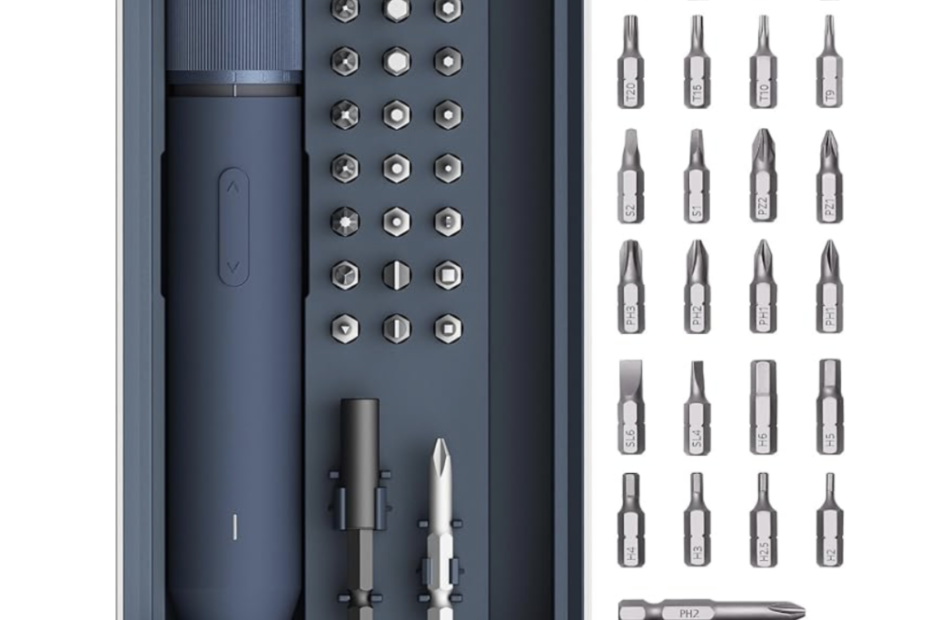
Today, those capabilities are spreading across virtually every category of consumer electronics. A perfect example is the HOTO Screwdriver Pro. I discovered it while shopping for a replacement set of conventional screwdrivers. For about the same $30 as a quality manual set that has changed little in decades, HOTO offers a beautifully designed electric screwdriver with a variable-speed motor, magnetic bit holder, and three-position torque control, all packaged in a completely new form factor. It includes 24 precision bits for everything from Phillips and flat-head screws to specialty fasteners.Even the case reflects thoughtful design. Rather than a disposable plastic box, it features a magnetically secured sliding lid that flips over to become a tray for holding loose screws.
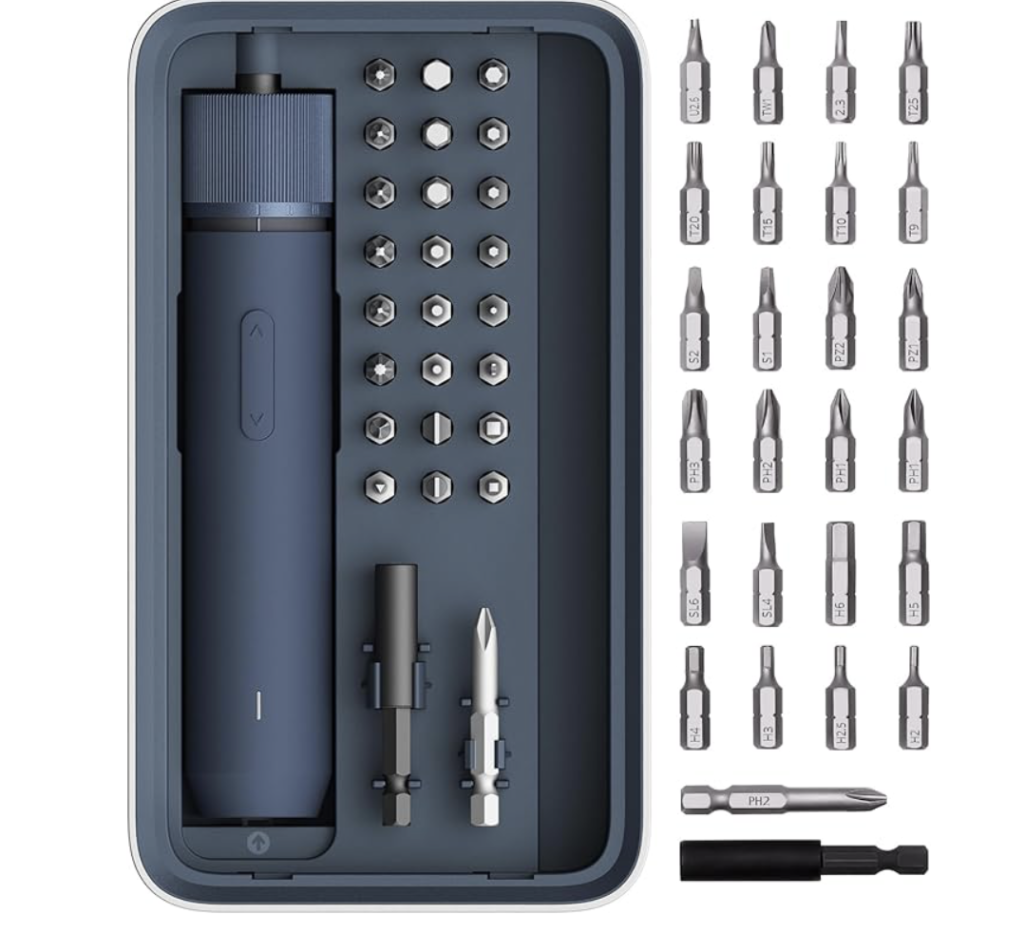
Other HOTO products use similarly designed cases that stack neatly together, creating a cohesive system rather than a collection of unrelated tools.
The screwdriver looks like something Apple might have designed, and its industrial design has earned prestigious Red Dot awards. Yet I paid just $22 during a sale, and even at its regular $29 price it’s an exceptional value. Because it turns slowly while delivering plenty of torque, it’s actually more useful than a cordless drill for most household projects.
Its impact reminds me of Braun’s reinvention of the drip coffee maker decades ago. Braun didn’t simply make a better coffee maker—it rethought the category. HOTO is doing much the same thing with everyday tools.
Founded in 2016 by an industrial designer, Lidan Liu, HOTO—short for “Home Tools”—was built around the idea that ordinary hardware doesn’t have to be bulky, intimidating or unattractive. The company now applies that philosophy to everything from precision screwdrivers and rotary tools to glue guns, flashlights, air pumps and handheld vacuums.HOTO is hardly alone.
In addition to HOTO, companies such as Anker, DJI, UGREEN, EcoFlow, Roborock, Insta360 and Bambu Labs are producing products that compete, not because they’re cheaper, but because they’re often better designed. China is no longer simply the world’s factory; it is rapidly becoming one of its leading centers for consumer product innovation.
China does enjoy one significant advantage. In Shenzhen and surrounding cities, industrial designers, engineers, component suppliers and manufacturers all operate within a compact ecosystem. Ideas move from concept to prototype to production in weeks instead of months.
Even so, great products still need a way to reach customers. That’s where Amazon changed everything. Before Amazon, launching a consumer electronics company required persuading retailers like Best Buy or Walmart to give you valuable shelf space. That meant dealing with distributors, large marketing budgets, promotional fees, long payment terms and, often, a pay-to-play retail environment that favored established brands. Amazon eliminated nearly all of those barriers. A startup in Shenzhen can design a product, manufacture it locally, ship inventory directly to Amazon’s warehouses and immediately reach millions of customers worldwide. Success depends less on convincing retail buyers and more on building a superior product that earns positive customer reviews. In many ways, Amazon has done for hardware startups what the App Store did for software developers. It democratized distribution. Combined with China’s extraordinary manufacturing ecosystem, it has enabled a new generation of Chinese companies to compete head-to-head with the biggest names in consumer electronics—and increasingly, to beat them at their own game.