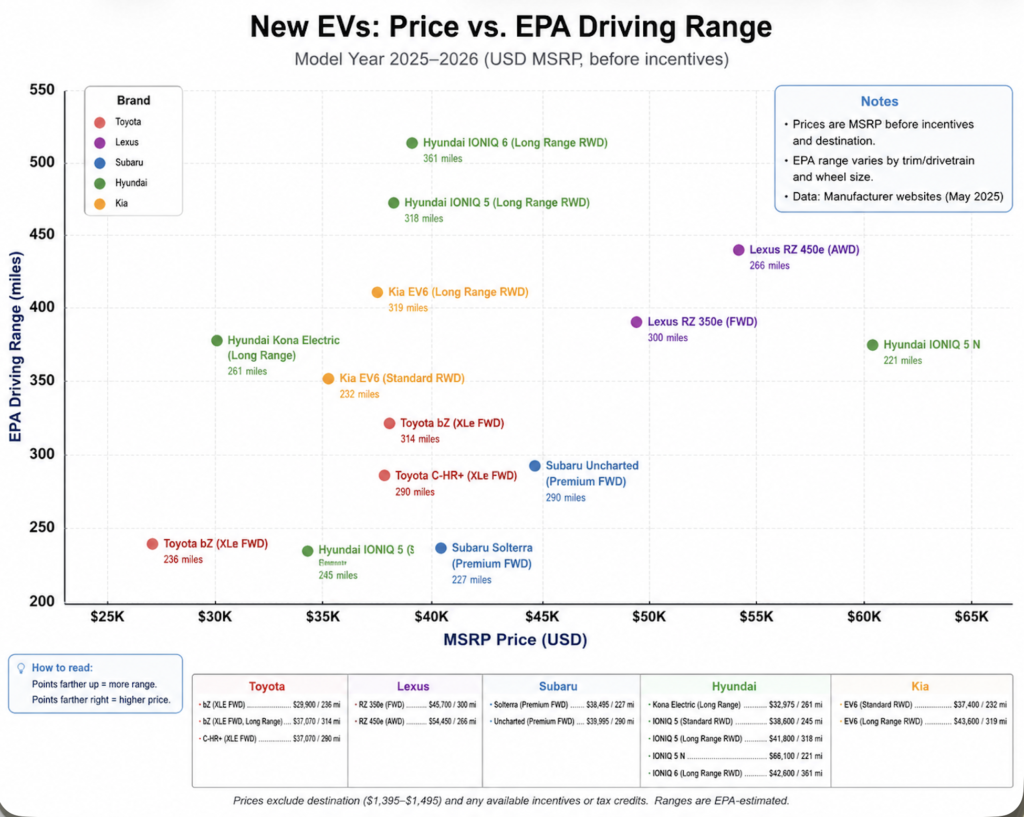
With a number of new EVs hitting the dealers’ lots, I began testing several of those now available in the $30K-$45K range. Compared to three years ago when I leased my Lexus RZ ($63K with a $15K rebate) there are many new models with greater range and quicker charging.
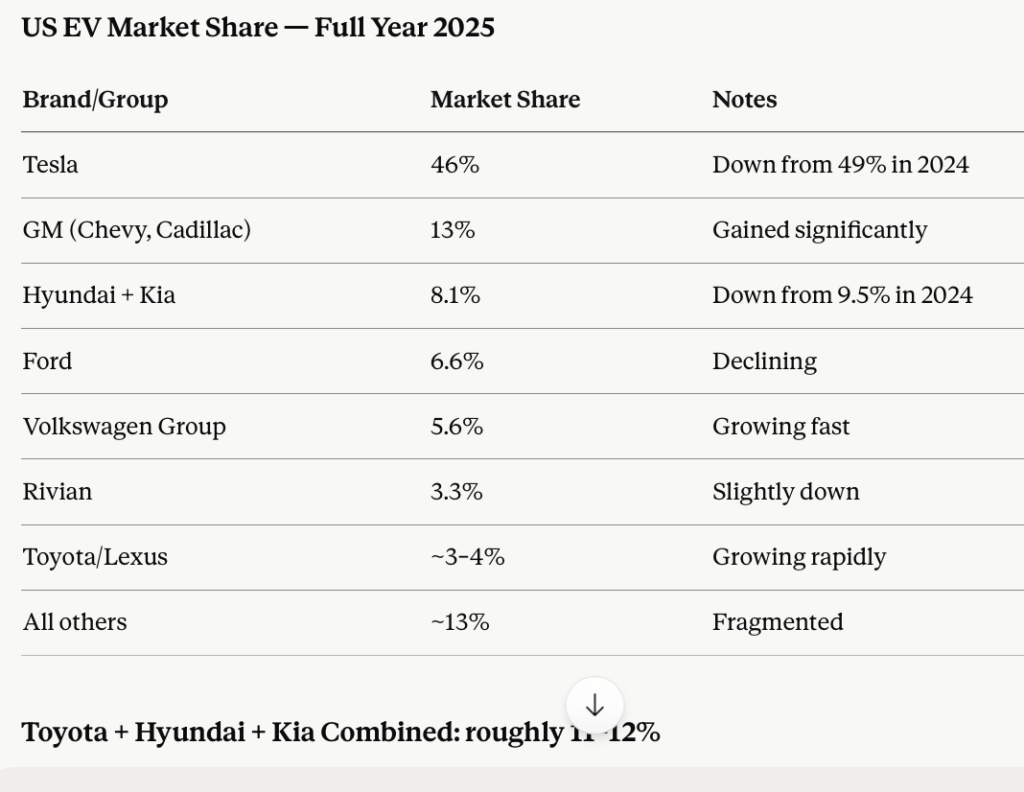
Surprisingly, for a company that has poo-pooed EVs, Toyota has released more than a half dozen models. With just about 3% U.S. market share, they’ve made a big committment to EVs.
Two of their models are based on older designs that have significantly improved, the Toyota BZ and Subaru Solterra, and two are smaller cars, the Toyota C-HR and Subaru Uncharted. (Subaru’s EVs all come from Toyota). Along with the Lexus, all of these cars are built on a similar platform. They all have similar ranges and charging speeds, and use many of the same interior hardware such as displays, stalks, controls, etc. The major differences are in their size, extra ammenities, and trim. They can be ordered in a higher trim level for about $5K more that adds an electronic rear view mirror, self-parking, 360 camera view, 4-wheel drive, and nicer interiors.
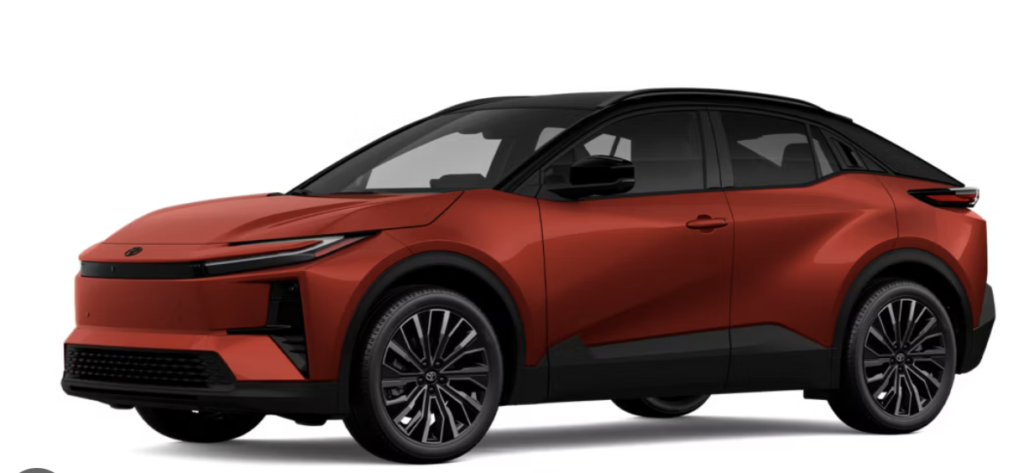
Toyota C-HR
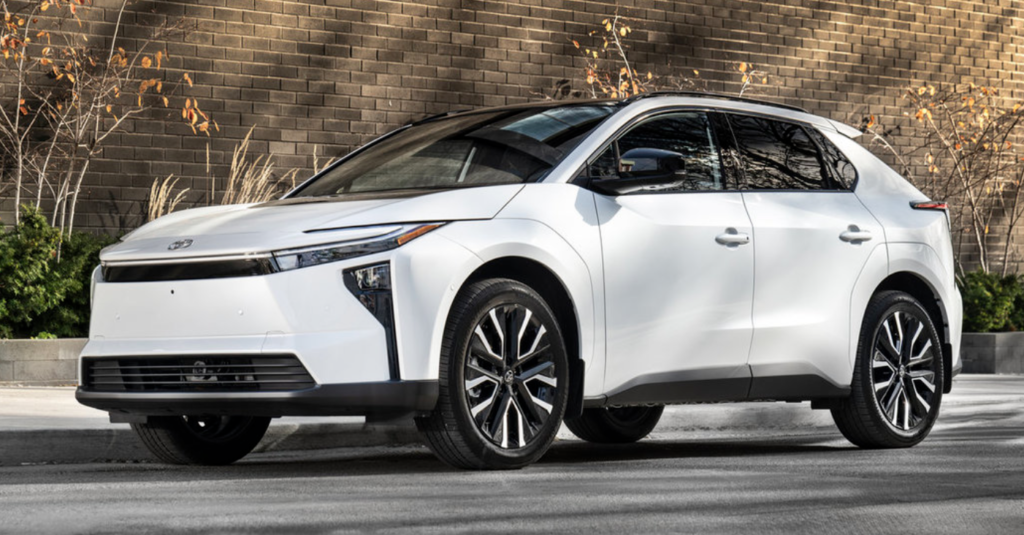
Toyota BZ
Taken together, Toyota’s EVs represent a conservative design approach with fewer advanced EV features such as a slower charging speed and fewer technology capabilities. None offer the ability to automatically route you to a charger on a long trip or automatically precondition your battery before charging. Their displays are more conventional and don’t show as much detail about the state of battery. Yet as Toyotas, they offer aincreased reliability and a strong service network.
If you’re looking for a car with the most high tech features on the most advanced EV platform, the Hyundai Ioniq 5 and Kia EV6 are standouts, especially for their low prices. Now in their fourth year, they charge in just a few minutes and they offer plenty of range.
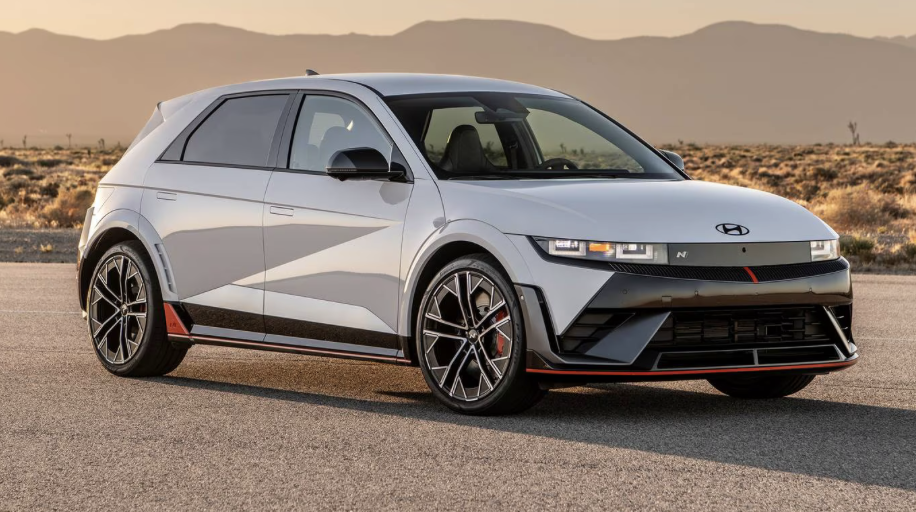
Hyundai Ioniq 5
Their interiors have sweeping LCD displays across the dash and they have all of the latest advanced features that really speak of the future. They can route you to a charger on a long trip, knowing when you will be running low. They display your blind spot on the display, when you change lanes, they back out of a parking space on their own, and they use futuristic, sleek materials inside.
But they do have one common issue, a defect that has stranded owners when the car simply stops. The problem relates to their ICCU unit that continues to plague the company. (The ICCU — Integrated Charging Control Unit — bundles all the charging controllers, current converters, and power components into a single unit). Hyundai has been replacing the unit for several years now, but the problem still persists. While it effects a small number of owners (2%-10%), those affected have had to wait for weeks for parts. Consumers Reports rates reliability an issue for these cars.
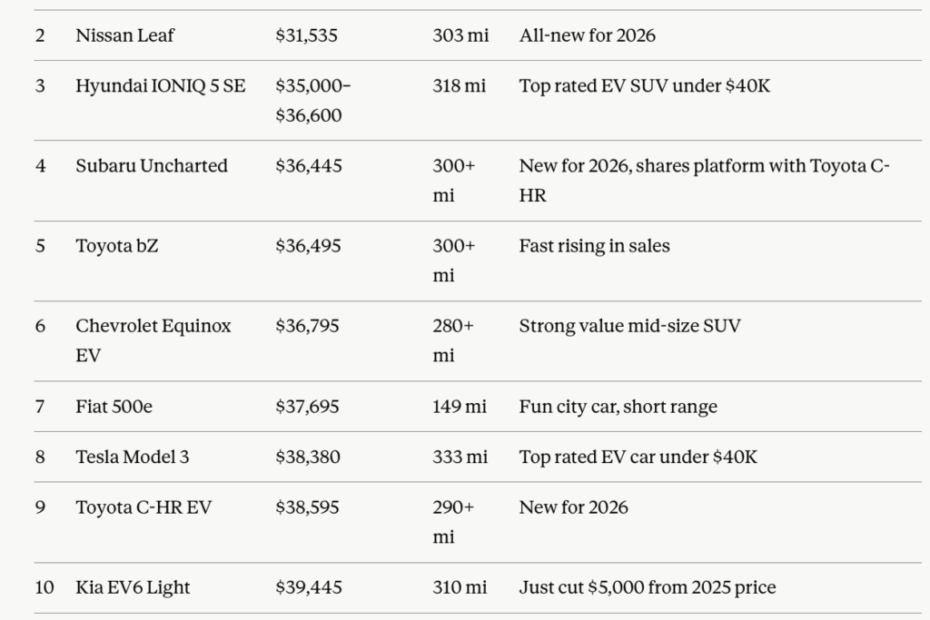
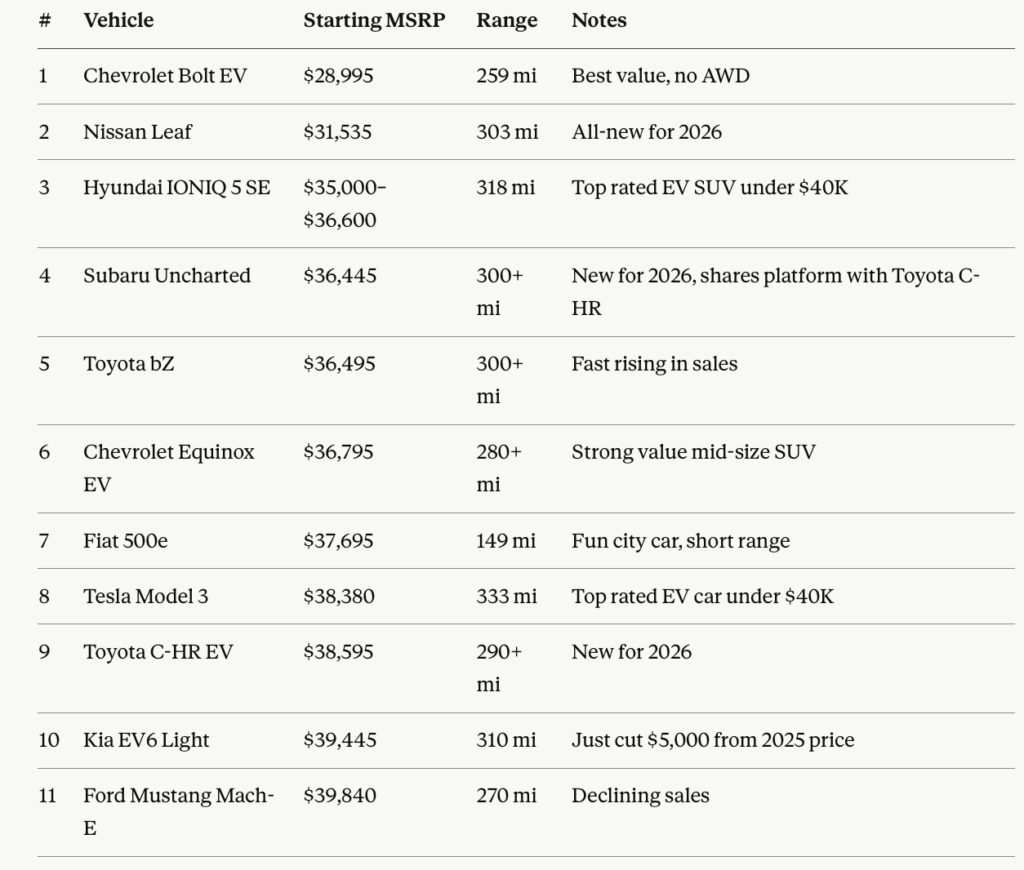
GM has a good lineup of low cost EVs including the Bolt, brought back for a “limited run.” In fact, the Bolt would be a great choice for many because its 300 mile range and under $30K starting price. I’ve ruled out all new GM cars for me because they have removed Apple CarPlay and Android Auto recently, eliminating many of the advantages of using your phone in your car. Instead they require you to subscribe and use their apps. It will be interesting to see if their market share drops.
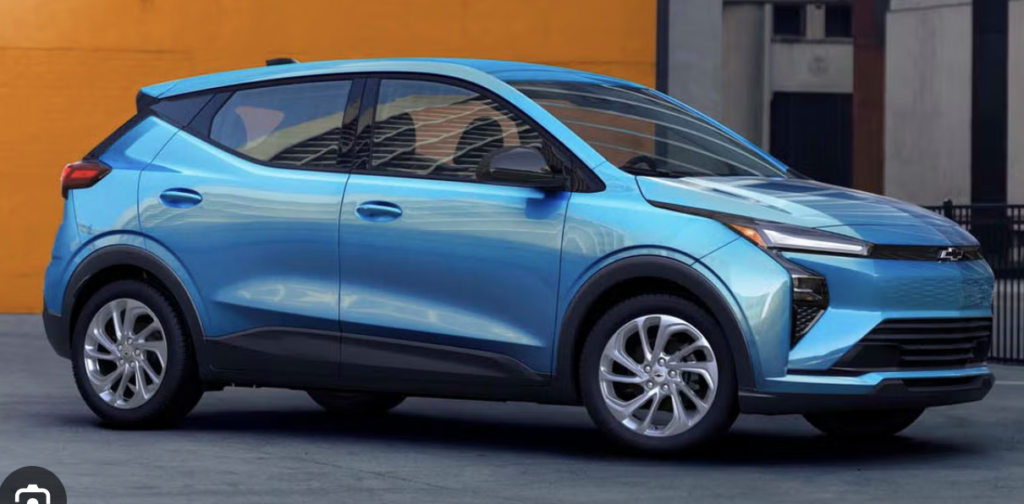
Chevy Bolt
Ford offers the Mustang Mach-E which is an excellent car, although it’s an older design. It’s credible, generally reliable and fun to drive.
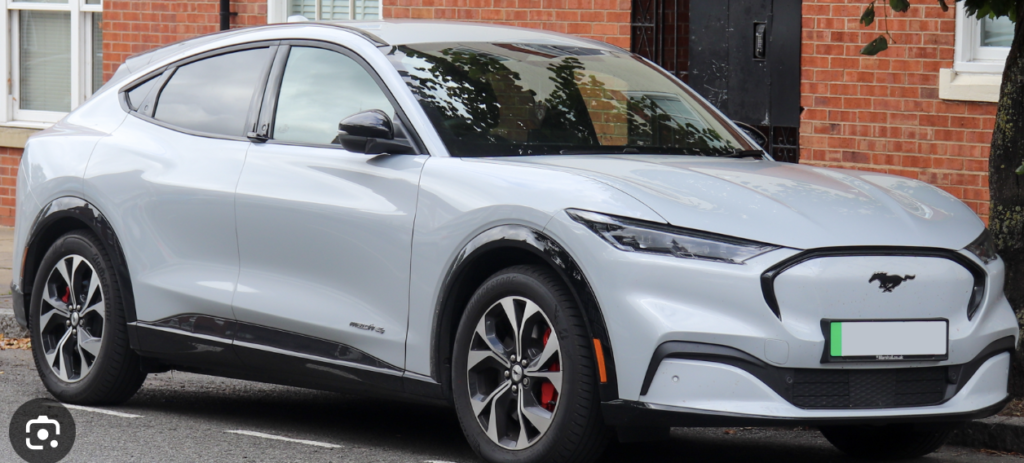
Ford Mustang Mach-E
Last but not least, Teslas are actually still very competitive to what you can buy today and they rstill epresent almost half of all EVs being sold today. It’s off my radar for obvious reasons, but not for it being an excellent car. A friend has one and regurlay drives nearly hands free between Los Angeles and San Francisco.
There are lots of other choices that I still need to try, including models from Volvo, BMW, Audi and Mercedes, all in the $60K-$80K range. From early reviews, the new BMW lineup looks like one of the best options among the the pricier cars.