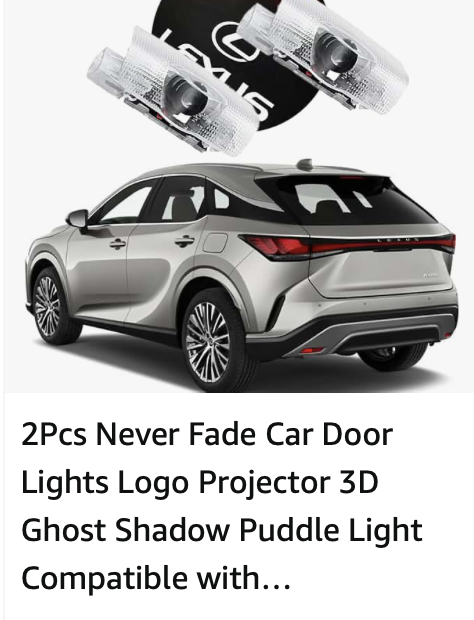
A few weeks ago, I decided to upgrade my Lexus EV with a feature found on the top model, door puddle lights that project the car’s logo when you exit the door. The light module contains a tiny LED projector that casts a crisp, illuminated Lexus logo onto the pavement. Yes, it’s near useless and gimmicky, not something I need, but well, why not, especially if it was so inexpensive and simple to install. Lexus dealers charges about $175 a pair for what looks identical.
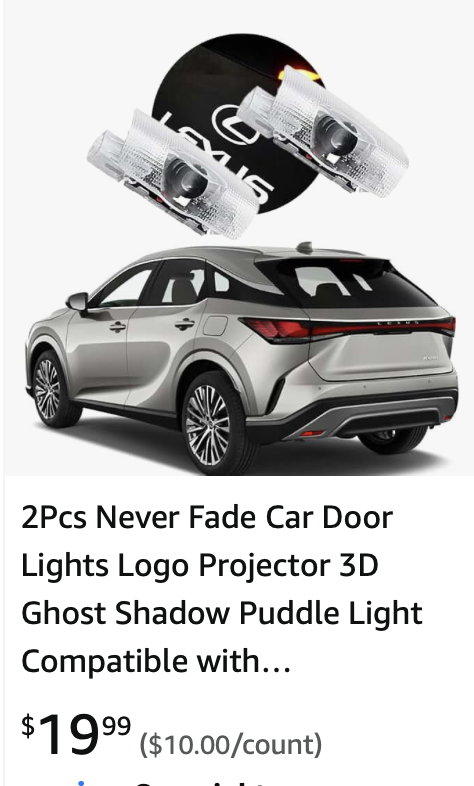
A search on Amazon brought up dozens of the identical-looking products priced from $15 to $25 for two. I checked out AliExpress, the retail arm of Alibaba.com. There, listed by a variety of sellers based in Shenzhen, were the same sets of projector lights that were on Amazon ranging in price from $2 to $15 a pair. They offered these lights for an array of automotive brands, each one replacing the lights built into the doors. Installation took about 3 minutes to snap out the original light, reconnect the wires and snap the new module back into the door).
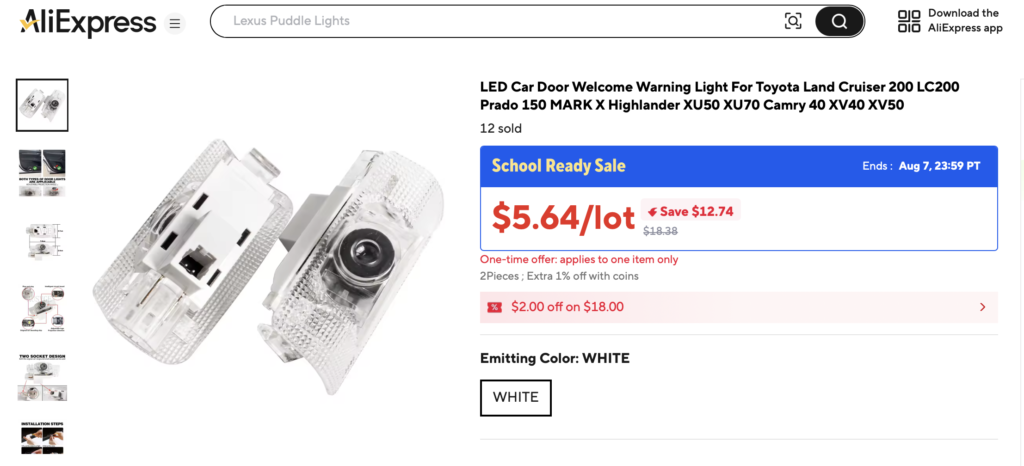
And to top it off, shipping from the sellers in China were free for many or free with a combined $10 purchase. Ten days later, a small envelope arrived in my mailbox, containing a pair of these LED projector lamps.
How is something like this even possible? How can a factory in China manufacture an assemply consisting of a circuit board, plastic enclosure, a camera, and LEDs and ship it to me for almost nothing?
AliExpress is the consumer marketplace owned by Alibaba, whose site has become a valuable entryway into finding Chinese manufacturers and products of all kinds. It’s hugely effective at connecting retailers in the U.S. with manufacturers in China, and something I’ve used for many years along with the site GlobalSources.com
While some compare AliExpress to Amazon, its underlying business model is fundamentally different. Unlike Amazon that buys inventory and brings the products to their warehouses, AliExpress acts as a connection agent. It rarely owns any inventory. Instead, it connects consumers around the world with Chinese manufacturers. And unlike Amazon, they eliminate the middlemen, the Amazon margins, warehousing, and delivery costs.
A $2 or $3 Lexus light likely cost about $1-$2 to manufacture in large volumes . On AliExpress, the factory owner sells it directly to you for a modest profit and skips the retail chain entirely.
But what about shipping costs? Neither the manufacture nor AliExpress ship their items one by one via standard air mail. Alibaba has their own logistics network, Cainiao, that consolodates shipping. Cainiao picks up the tens of thousands of packages from thousands of factories each day by truck and delivers them to a central hub and packs them tightly into air cargo planes.
By shipping thousands of items in a single container, the cost to move my package across the ocean is a matter of cents. They then use the USPS to deliver the item to my mailbox.
Most Chinese companies operate on very low profit margins, focusing on volume sales. Where an American retailer might look to make a $10 profit per unit sold, a factory seller on AliExpress is often content making a dollar or so—provided they sell 50,000 units a month across a large number of global markets.
I should note that Ali-Express is not Temu, a site more like Amazon that sells directly to consumers. Ali-Express’ products include more hardware and automotive parts than Temu, which has more low-cost novelty products.
Here are a few more random examples of items from Ali-Express.
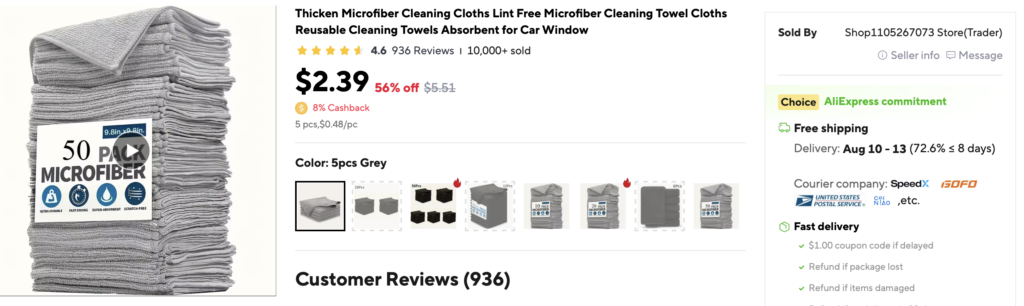
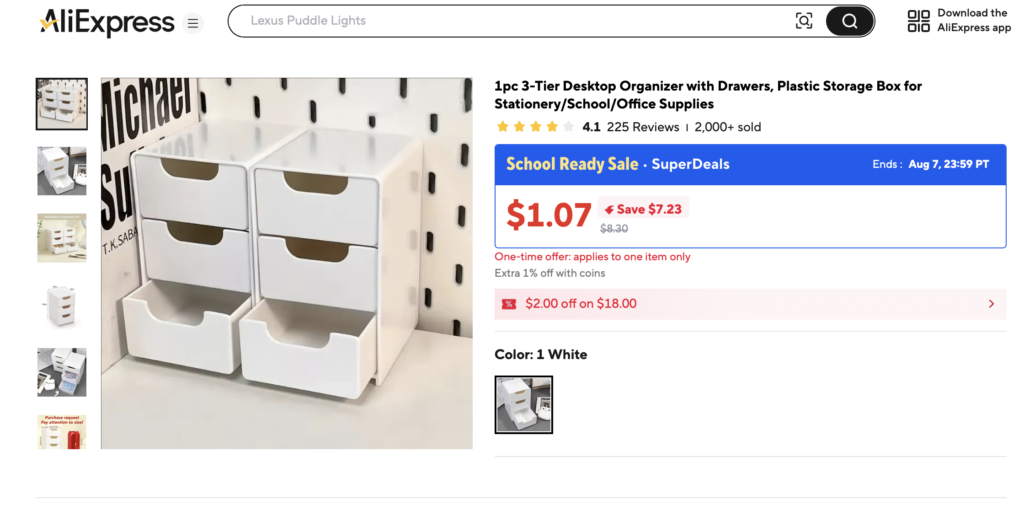
In the several orders I’ve made, delivery has been reliable, products have matched their descriptions, with no disappointments. Next time you shop on Amazon it’s worth checking on Ali-Express. You may be getting the same product – just eliminating Amazon’s profit.